


It is better not to plant the entire pit directly in soil. Wash away any remaining fruit, carefully open the hard outer shell, and remove the seed inside. This helps reduce the risk of mold and allows the seed to absorb moisture more easily.
Non-GMO Mango Seeds for Home Garden Fast Germination & Easy Growing-YOY
Non-GMO Mango Seeds for Home Garden Fast Germination & Easy Growing-YOY
Regular price
$42.49
Regular price
$42.49
Sale price
$79.99
Unit price
per
BUNDLE & SAVE
Couldn't load pickup availability

Non-GMO Mango Seeds for Home Garden Fast Germination & Easy Growing-YOY
Regular price
$42.49
Regular price
$42.49
Sale price
$79.99
Unit price
per

🎁 🌸 TIPS: All goods are authentic, with genuine patents,counterfeit must beinvestigated! Customers, please identify our products!

🥭 Nature’s Journey Makes Every Mango Tree Special
Mango seeds naturally follow their own unique growing journey.
With the right preparation, patience, and care, you can experience the amazing process of seed germination, watching the first green sprout emerge, and nurturing your very own mango tree from the beginning. 🌱
Every sprout is a new beginning. Every leaf reflects the love and care you put into growing it. 🍃
If you’re tired of ordinary store-bought mangoes that are often picked too early and lose their natural sweetness during transportation, this heirloom mango variety brings you closer to the authentic tropical flavor of the past. 🥭
Grow your own mango tree and experience the rich aroma, vibrant color, and naturally sweet taste that generations have loved. Every harvest is a gift from nature — a reminder of patience, care, and the joy of growing something truly your own. 🌿



✨100% Organic & Non-GMO Purity
Grown from carefully selected, high-quality stock, these seeds offer 100% organic, non-GMO purity—meeting trusted standards for natural and sustainable gardening.

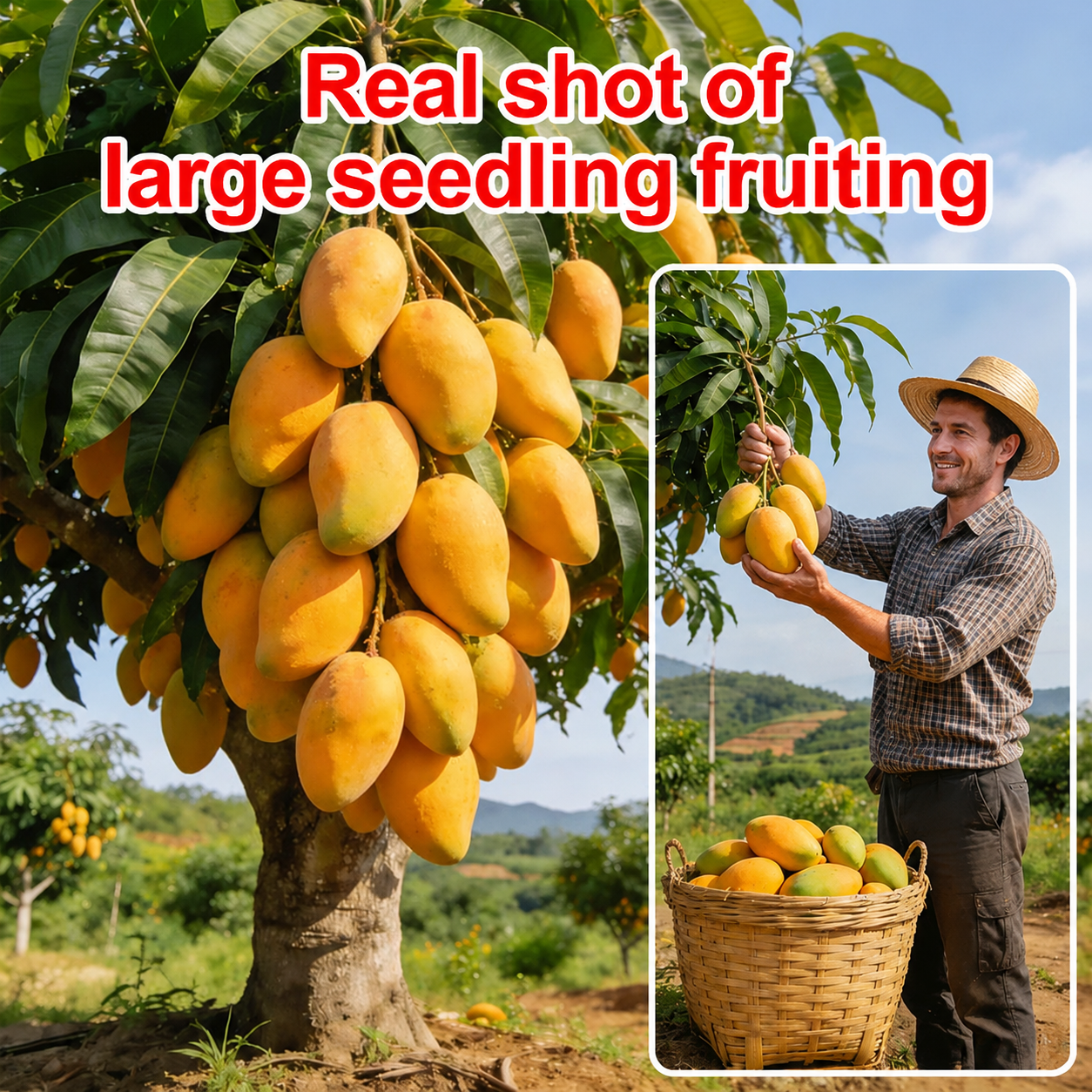
☀️ Extremely Bountiful Yield: Up to 50–80 Fruits Per Tree!
Each Extra-Sweet Superior Pink Mango tree is a productivity powerhouse, capable of producing 50–80 luscious fruits.
Its Advantages
🌱 How to Grow (Simple Guide)
-

🫘 Sow the Seeds
Plant the pink mango seeds directly in a pot, grow bag, or nursery container filled with well-drained, nutrient-rich soil.
-

🌱 Wait for Germination
Seeds typically sprout within 10–14 days under warm, ventilated conditions. Watch for young seedlings emerging from the soil.
-

🪴 Care & Maintain
Water consistently to keep the soil moist, and fertilize with organic compost or balanced fertilizer every 2–3 weeks. Provide ample sunlight and support for healthy growth.
-

🥭 Harvest Your Mangoes
Young trees may begin flowering and producing fruit around 0.5 years after planting. Full maturity is reached in 1 year, yielding juicy, extra-sweet pink mangoes for your home garden year after year.
Enjoy Your Harvest
-

Boosts Immunity
Packed with Vitamin C to strengthen the immune system naturally.
-

Homemade Jam & Smoothies
Contains antioxidants that promote cardiovascular well-being.
-

Regulates Digestion
Rich in dietary fiber to support healthy digestion and gut function.
-

Promotes Healthy Vision
Provides Vitamin A and antioxidants for optimal eye health and visual clarity.
Growing Guide
Mango Seed Growing FAQs
Practical guidance on cleaning, germinating, planting, and caring for mango seeds throughout their early growing journey.
Usually not. Mangoes are tropical and subtropical plants, so their seeds prefer warm conditions. A temperature of around 24–30°C is generally more helpful than cold treatment.
Wrap the cleaned seed in a slightly damp paper towel, then place it inside a resealable bag or covered container with a little air. Keep it in a warm place away from strong direct sunlight and check the moisture level every few days.
Remove the seed, gently rinse away the mold, and replace the paper towel and container with clean ones. Keep the towel damp rather than soaking wet and allow some ventilation. If the seed has become soft, black, or foul-smelling, it may no longer be suitable for planting.
Place the seed on its side or with the root pointing downward, then cover it with about 1–2 centimeters of loose soil. Avoid planting it too deeply. Leaving the top of the seed slightly visible can make it easier to monitor its progress.
Water according to the soil moisture rather than following a fixed schedule. Water thoroughly when the top layer of soil begins to feel dry. Make sure the pot has drainage holes, because constantly wet soil can cause the seed and roots to rot.
Under warm and consistently moist conditions, some seeds may begin developing roots and shoots within one to three weeks. Germination speed can vary depending on the variety, freshness, temperature, and overall condition of the seed.
A young seedling can grow indoors for a while if it receives bright light and good airflow. As it becomes larger, gradually increase its exposure to sunlight. Avoid moving it suddenly from indoor conditions into intense direct sun, as the leaves may become scorched.
Not necessarily. A tree grown from seed may produce fruit with a different flavor, size, appearance, or quality. It can also take several years to bear fruit. Commercial growers often use grafted trees to preserve the characteristics of a selected parent variety.
Germination speed can vary depending on seed freshness, temperature,
moisture, growing conditions, and mango variety.
★★★★★
These non-GMO mango seeds are incredible! High germination rate, sprouted in just 10 days. Can’t wait for fresh sweet mangoes!
— Sarah M., Texas
★★★★★
Easy to grow for beginners! 100% non-GMO, healthy seedlings, perfect for my home garden. Best mango seeds I’ve ever bought!
— Michael T., California
★★★★★
Great quality non-GMO mango seeds! All seeds viable, fast growing, and suitable for indoor & outdoor planting. Highly recommend!
— Jennifer L., Florida
★★★★★
My family loves homegrown fruits! These non-GMO mango seeds grow strong plants, will definitely buy more for my garden.
— David K., New York
★★★★★
100% natural non-GMO mango seeds! Clear planting instructions, high survival rate, ideal for gardeners of all levels.
— Emily S., Illinois
★★★★★
Delicious sweet mangoes guaranteed! These non-GMO seeds produce healthy trees, a must-have for every home gardener!
— Lisa P., Ohio